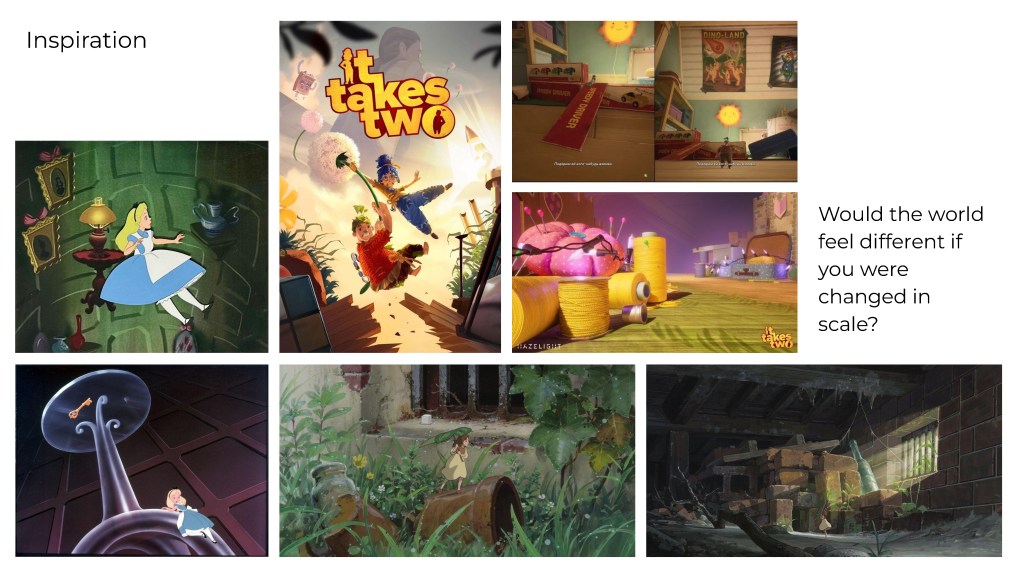
Would the world feel different if you were changed in scale?
Tiny Wonders explores spatial perception through transformation. Inspired by games and films that play with scale and embodiment, we asked: what happens to architecture when the body changes?
Instead of designing one static environment, we designed multiple spatial experiences that unfold through shapeshifting. The player begins as a human and progressively transforms into different animals — each form unlocking a different way of navigating space:
- Cat → exploring domestic verticality
- Bat → flying through a tower
- Fish → swimming within a bathroom world
- Fox → moving outdoors through a magical landscape
The project reframes architecture not as a fixed container, but as something relative to body, scale, and movement.
Creative Process
Stage 1 : Scaling Down
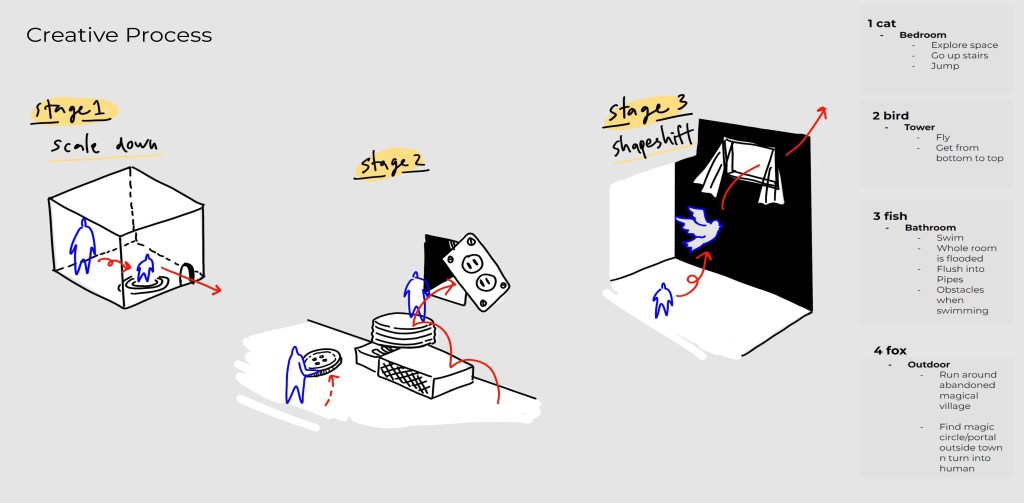
We began with a domestic interior. The goal was to make familiar spaces feel oversized and strange when the character shrinks.
Stage 2 : Environments
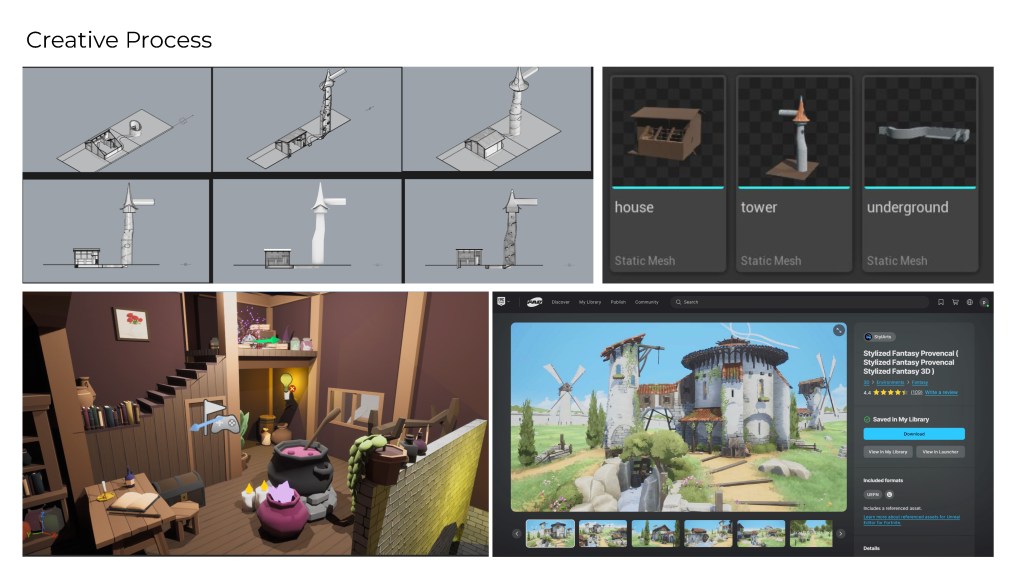
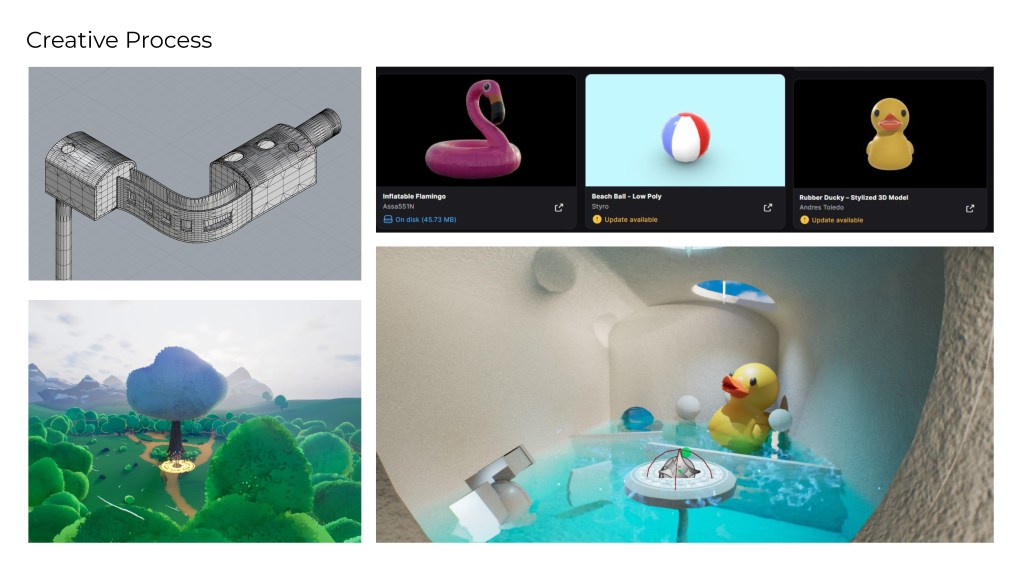
We introduced a different environmental sequence where traditional walking no longer worked. This led to implementing flight, swimming, and falling mechanics.
Stage 3 : Shapeshift System
We built a transformation logic system in Unreal Engine:
- Trigger spheres
- State switching between characters
- Movement mode changes
- Collision adjustments
We also:
- Imported and edited static meshes
- Adjusted materials and textures
- Added props and environmental assets
- Built a water environment
Some assets were modeled, others were sourced and adapted to fit our stylized world.
Learning Process
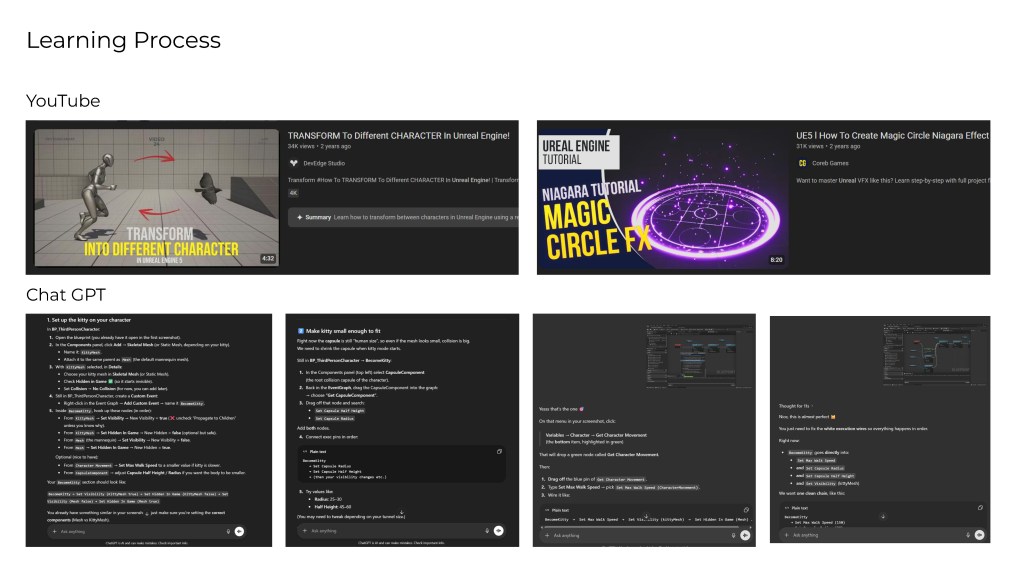
We relied heavily on:
- YouTube tutorials (character transformation, Niagara effects, flying mechanics)
- ChatGPT for debugging Blueprint logic, understanding collision systems, and troubleshooting water setup
- Unreal Engine documentation
This project required learning:
- Blueprint scripting
- Character movement modes
- Collision scaling
- Material editing
- Water system setup
- State switching logic
AI tools helped us debug faster and understand logic structures when errors appeared.
Blueprint Walkthrough
Our system was structured around:
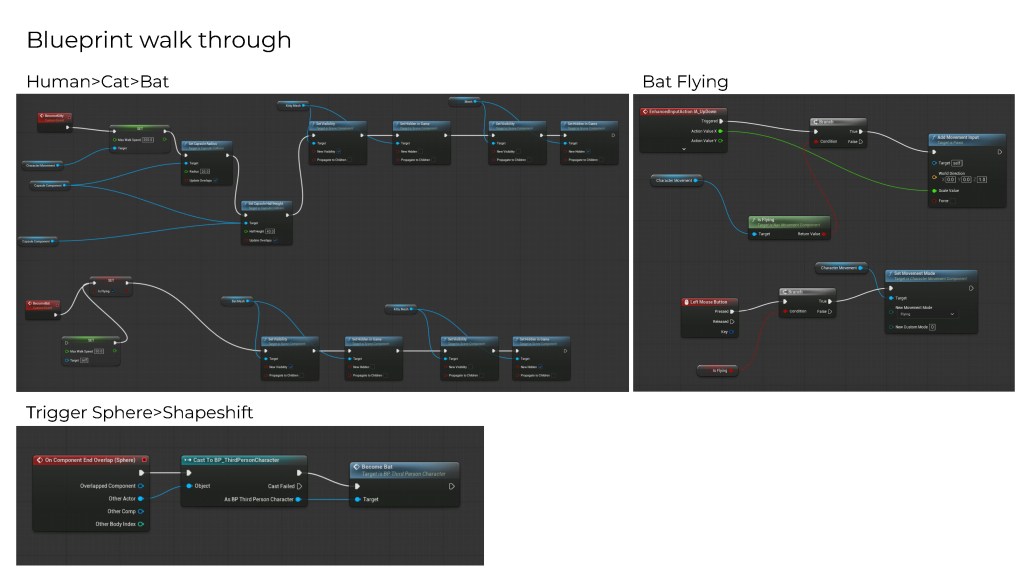
1. Character Switching
Human → Cat → Bat → Fish → Fox → Human
We used:
- Overlap Events (Trigger Spheres)
- Boolean checks for state transitions
- Spawn/possess character logic
- Movement mode switching
2. Bat Flying System
- Input mapping for vertical lift
- Gravity modification
- Controlled descent
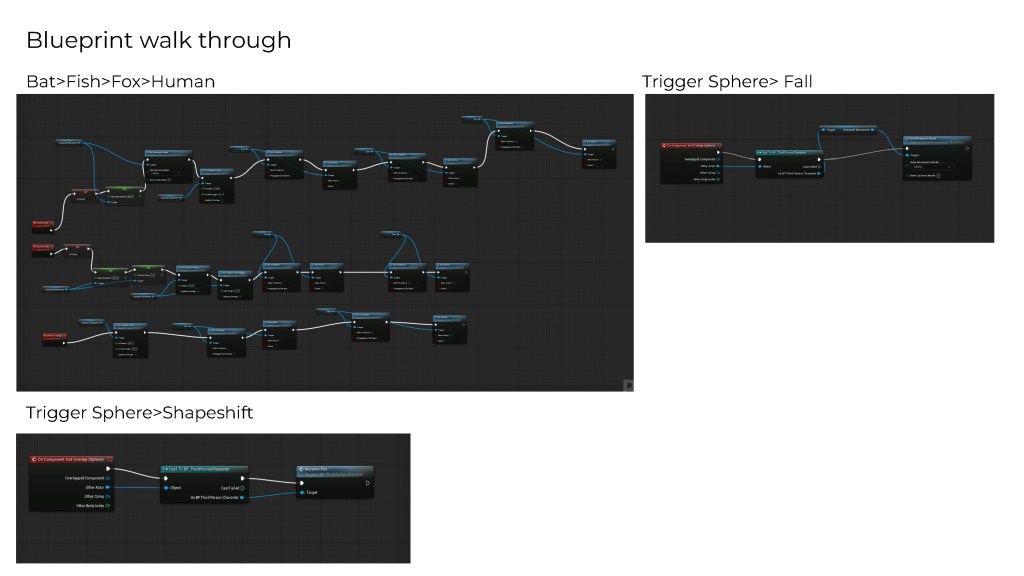
3. Fish Swimming
- Adjusted movement to simulate floating
- Water collision logic
- Prevented ground-based physics
4. Fall & Reset System
Trigger spheres controlled:
- Shapeshift
- Falling transitions
- Scene progression
We broke the script into modular sections so each transformation worked independently before integrating them.
Successes
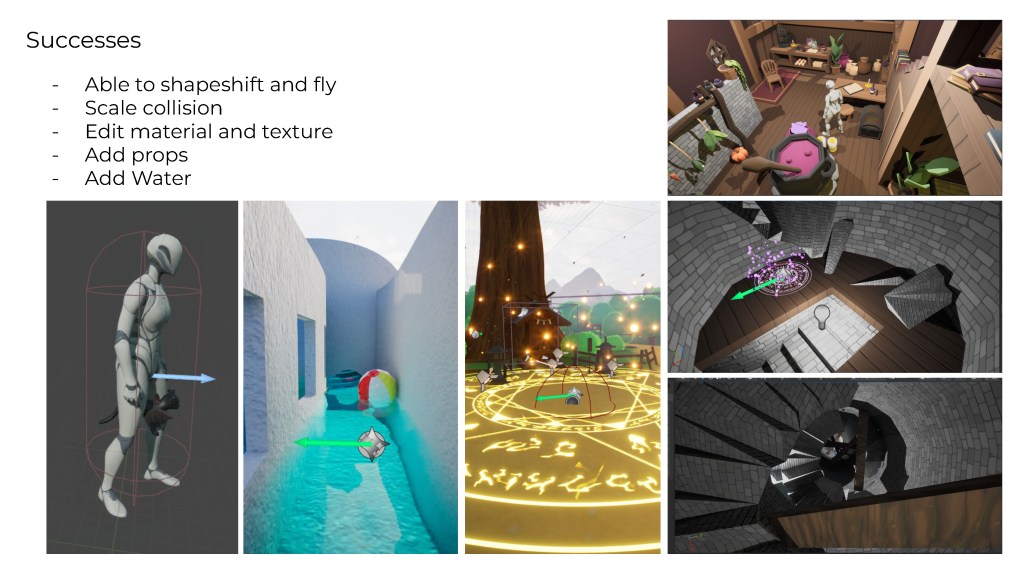
Successfully implemented shapeshifting
- Enabled flying mechanics
- Adjusted collision scale correctly
- Edited materials and textures
- Added props to enrich environment
- Implemented water system
- Created multi-environment experience
The biggest success was getting state-switching to work smoothly across multiple character types.
Challenges
1. Collision Scale
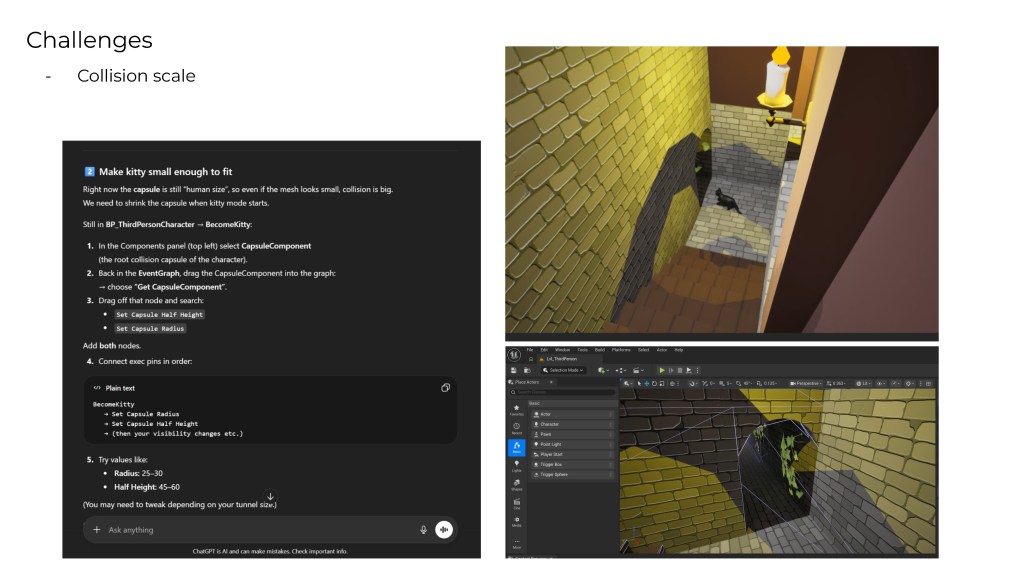
When scaling down characters, collision capsules remained large, causing floating or blocking issues. Adjusting capsule radius and half-height was crucial.
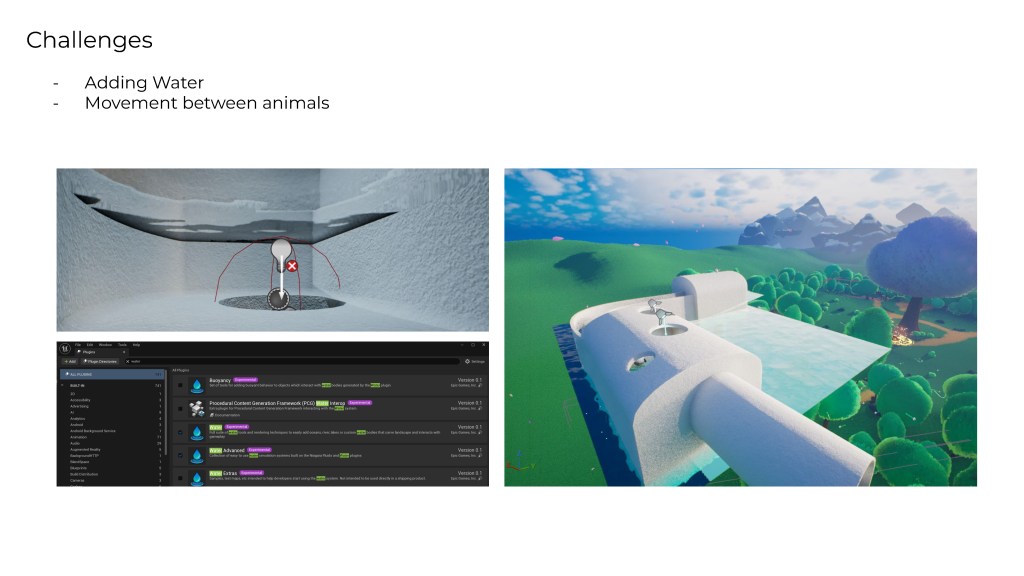
2. Adding Water
Water setup required:
- Correct collision volumes
- Physics adjustments
- Movement tuning
3. Movement Between Animals
Each animal required a different movement system:
- Walking
- Flying
- Swimming
Balancing transitions without breaking logic was challenging.
Next Steps
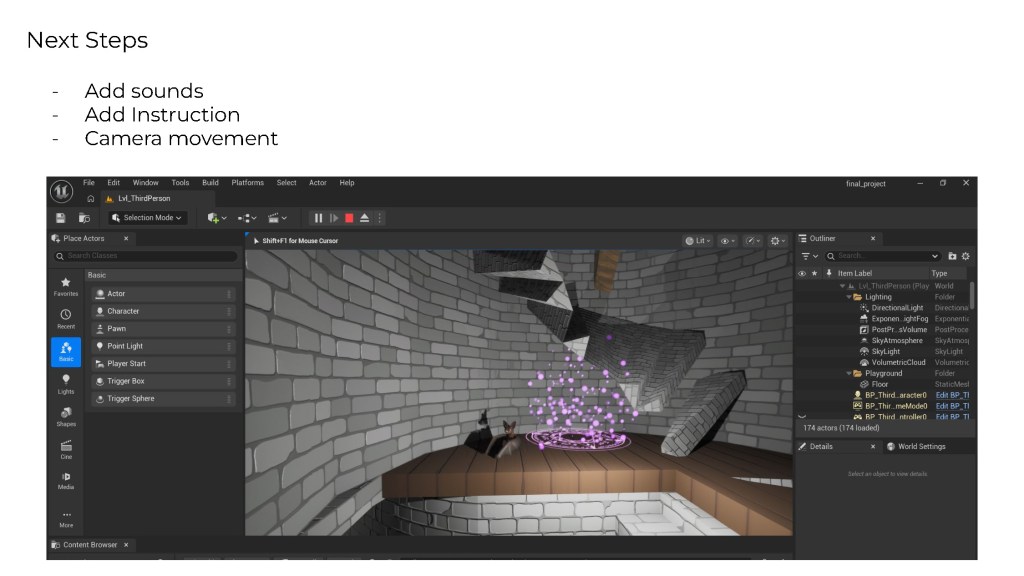
If we had more time, we would:
- Add sound design in game (ambient + transformation effects)
- Add instructional UI for players
- Improve camera movement and transitions
- Refine animation blending
- Add narrative elements tying the environments together
- Enhance lighting and post-processing for mood
Reflection
This project shifted how we think about space in virtual architecture.
Instead of designing static rooms, we designed relational environments,
spaces that change meaning depending on who (or what) inhabits them.
 Course Blog
Leave a comment