Sriya Thotakura
Temporal Architecture and Interaction Design
1. Concept & Interaction Design:
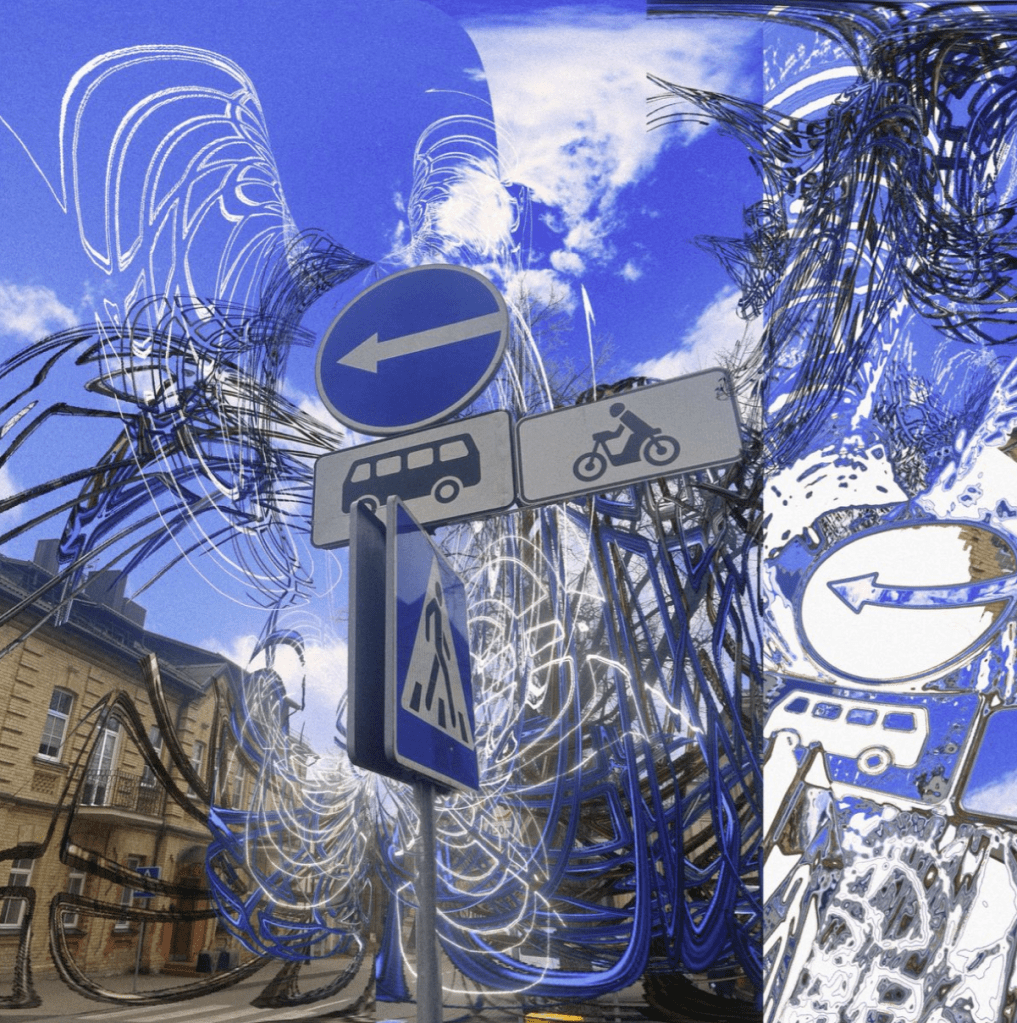
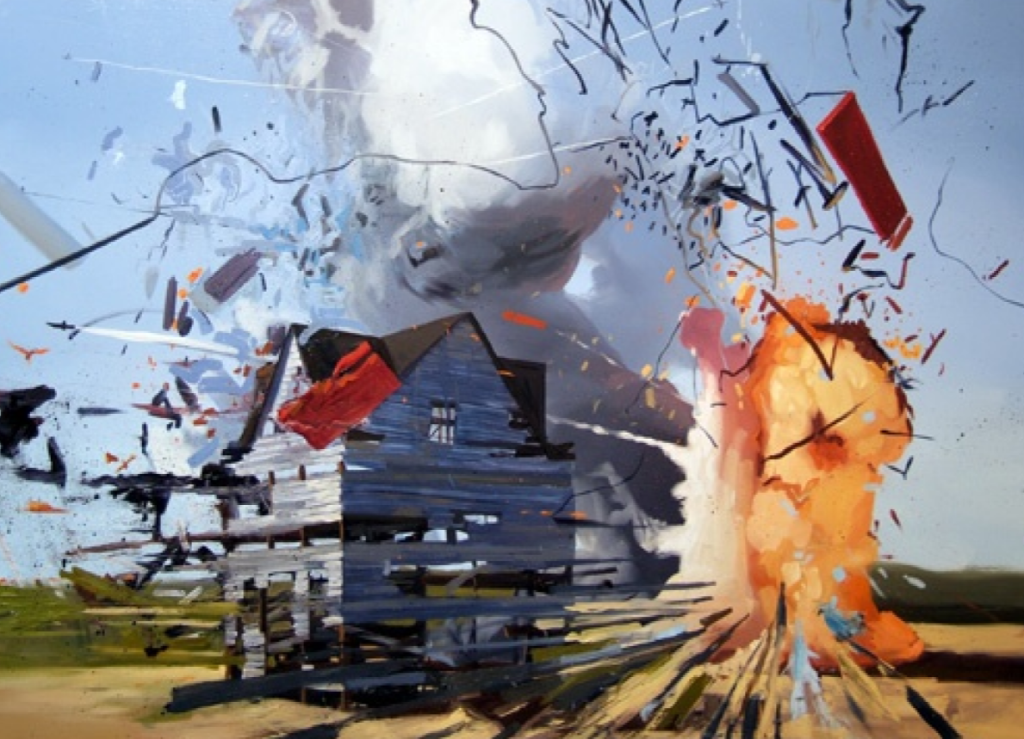
My project begins with an exploration of abstract urban-scapes. Specifically, I am investigating the Conceptual Feel of Volume. I am indenting to create a visual abstraction. This explores past architectural states. The transition between realities is not an instantaneous flash, but a deliberate, three-stage process:
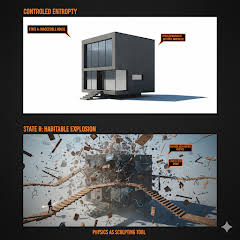
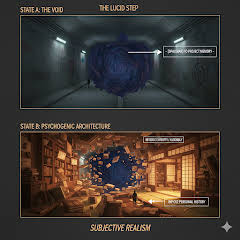
1. Explosion of structure 2. Imagination build of infrastructure 3. Emergence of structure
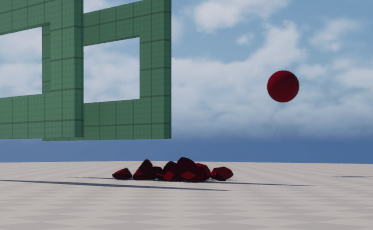
To ground this, I examined several case studies of physical intervention. These include Rachel Sussman’s Sidewalk Kintsugi, which involves repairing urban decay with gold resin. Another example is Jan Vormann’s Dispatchwork, which repairs crumbling walls with colorful Lego bricks. These real-world examples prove that destruction in architecture can be treated as a highlighted event rather than just a mistake.
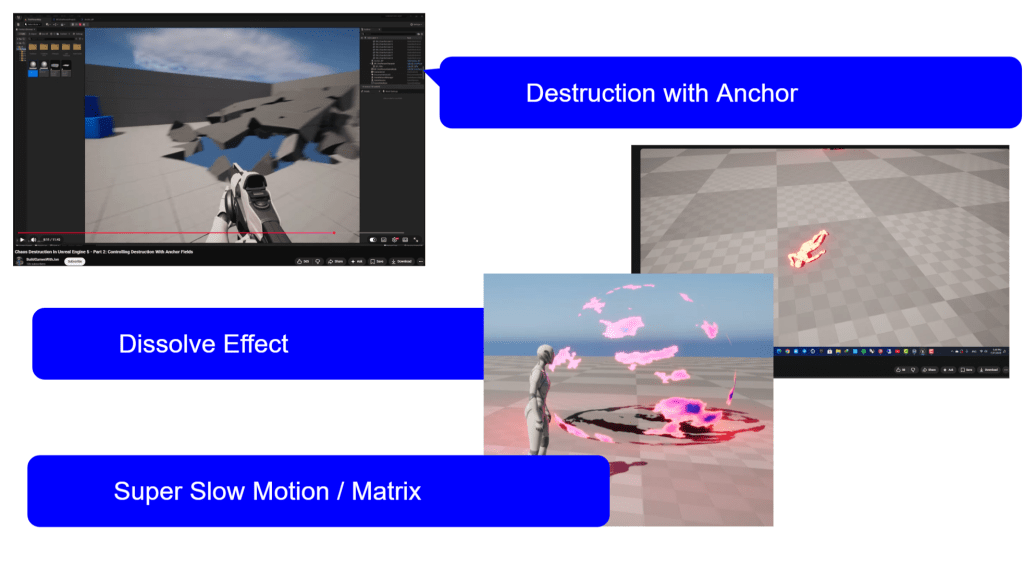
2. Logic: 4-D
I am exploring the concept of Chrono-Architecture for my midterm touchpoint. It is the idea that a building is not just a place in space. It is also a container of time. The core interaction design revolves around a mechanic called “Temporal Slicing”. This mechanic treats history as a traversable spatial axis. It is the 4th dimension referenced from the game logic of Miegakure.

By pressing a toggle key (Z/X), the player gains “Admin Access” to the physics of the world. This action dissolves the present ruin into its pristine past. The layout features “freestanding zones” of instability. In these zones, the user imposes their personal history onto the city. This action literally builds their past into the present. It bridges physical gaps.
3. Lighting, Sound & Particle Systems:
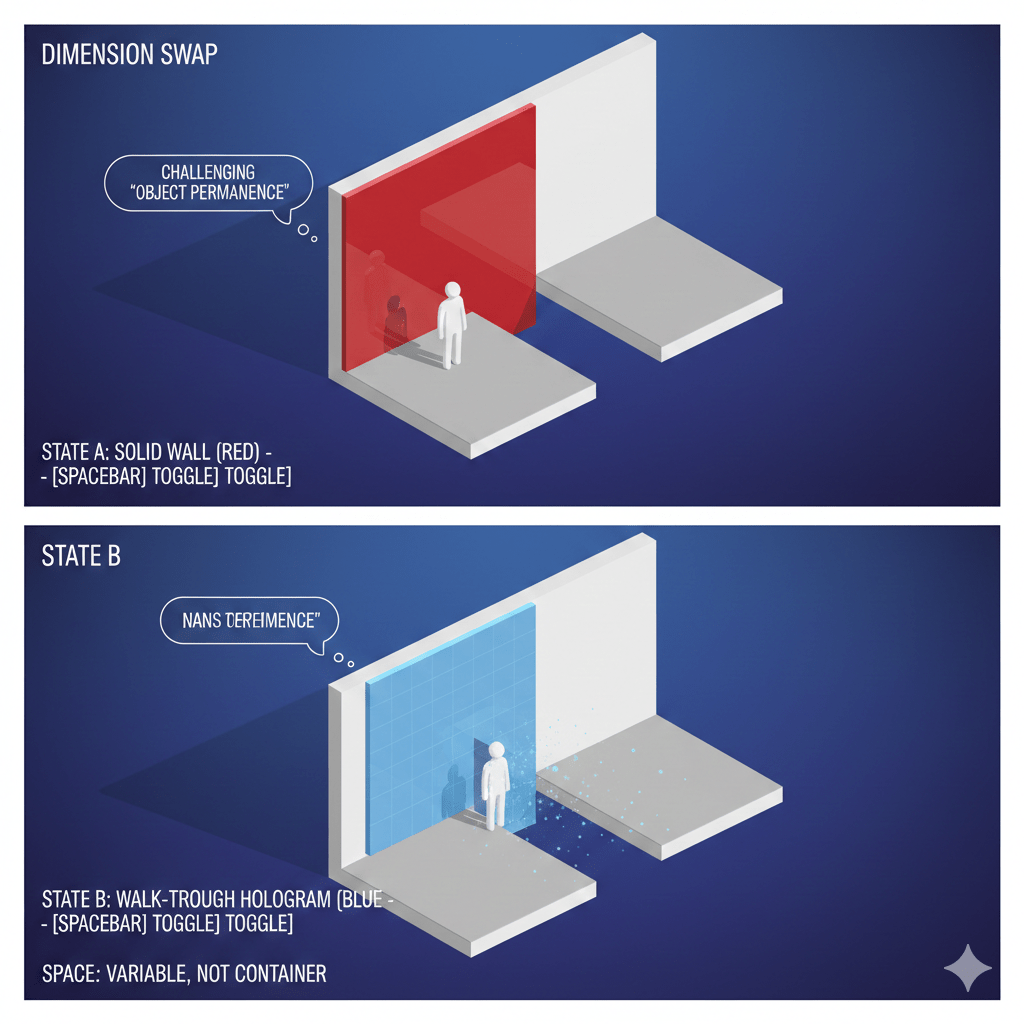
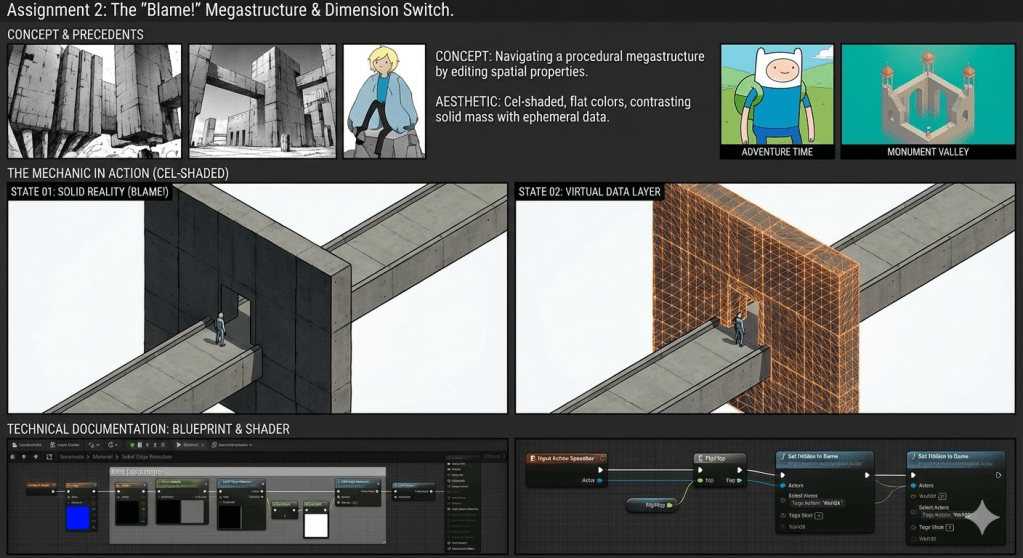
4-D Concept from Miegakure in sketches as – A switch.
The look and feel relies heavily on stark environmental contrasts:
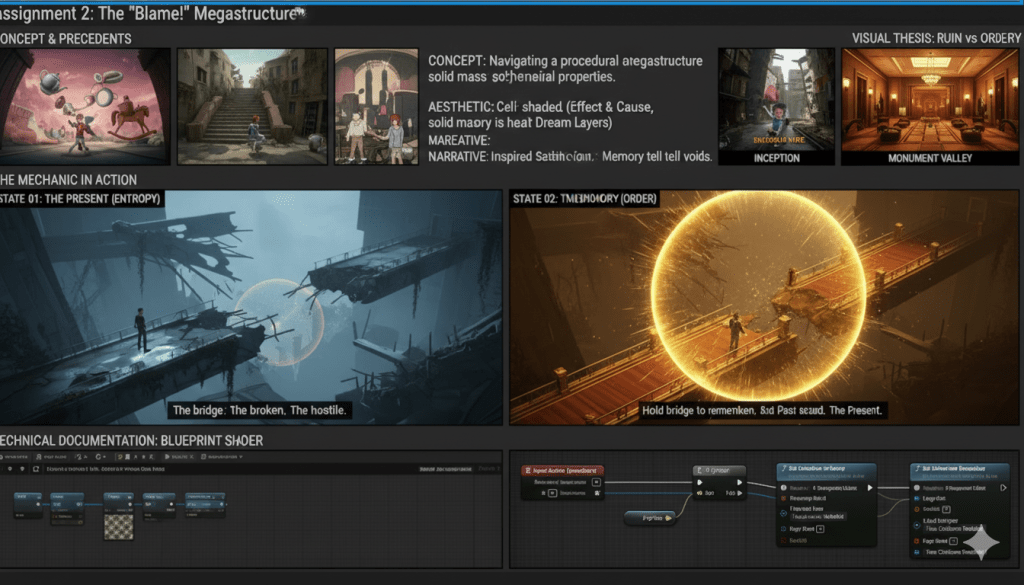
Image: “Habitable Explosion” or Chaos Physics particle system sketch.
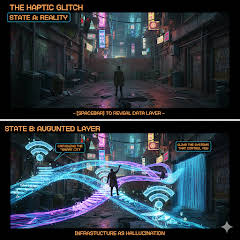
State A (The Present/Ruin): Inspired by manga: Blame. It features overgrown concrete and collapsed ceilings. Dystopian societies.
State B (The Memory/Serene): Inspired by game: Neir Automata, featuring pristine architecture, nature, and warm gold lighting.
4. Components: Technical Components & Shader Sculpting
To achieve this seamless shift without crashing the game’s frame rate, I am utilizing Material Logic. This method is used rather than dynamic physics simulations. I use Master Materials and Material Parameter Collections as a digital sculpting tool. This allows me to execute synchronized volumetric masking (a “Sphere Void”). It procedural reveals pre-placed, static fractured geometry. The core flow sells a convincing architectural Metamorphosis, where the player acts as a temporal slicer.
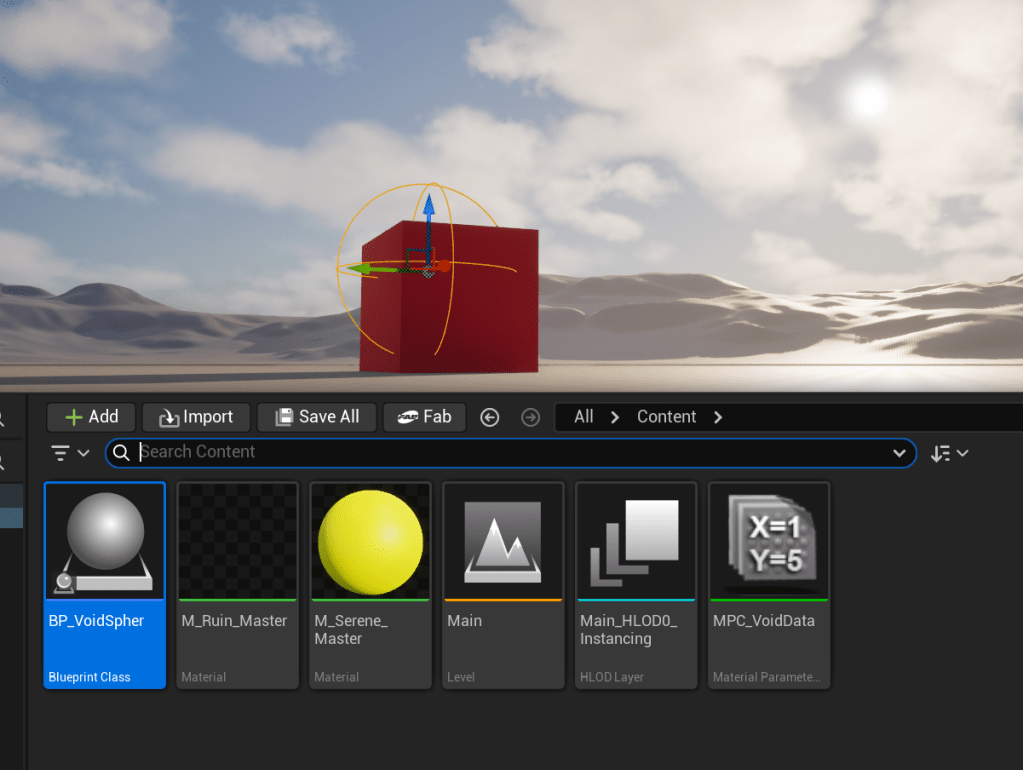
1. BP_VoidSphere (Logic): A player-controlled Blueprint Actor. It updates localized position (SpherePos) and radius (SphereRadius) data in real-time within the Level Editor.
2. MPC_Voiddata (Shared Data): A Material Parameter Collection acts as a centralized data hub. It stores the BP_VoidSphere coordinates. It also stores the size for all materials to access at the same time.
3. M_RuinMaster (4D Cross-Section): The global Master Material reads the MPC_VoidData. It procedural masks the “Ruin” state (decay) and creates the localized “void window.”
4. M_Serene_Master (Memory Revelation): The clean Attribute Set (polished textures) revealed exclusively within the localized BP_VoidSphere void window.
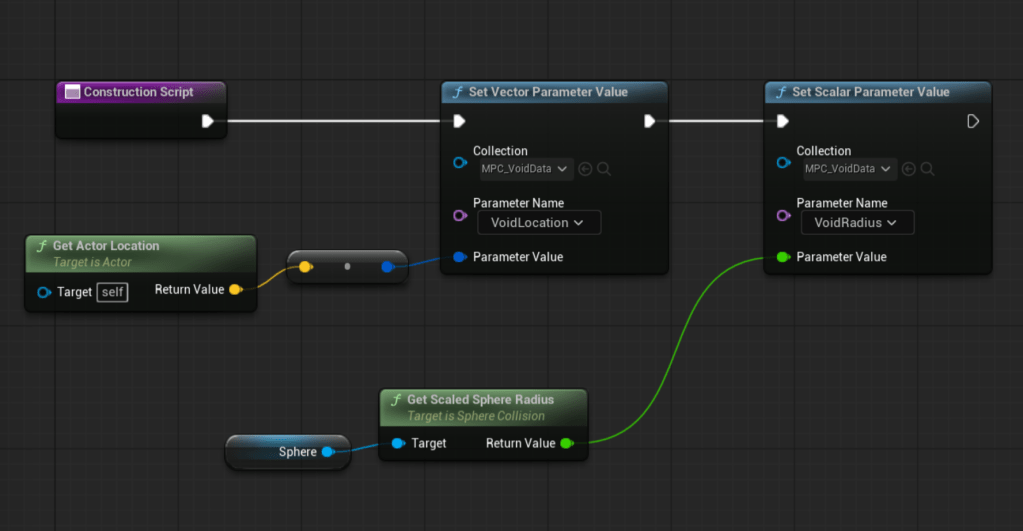

Visual reference logic of State A vs. State B
5. Theoretical Framework: Speculative Futures
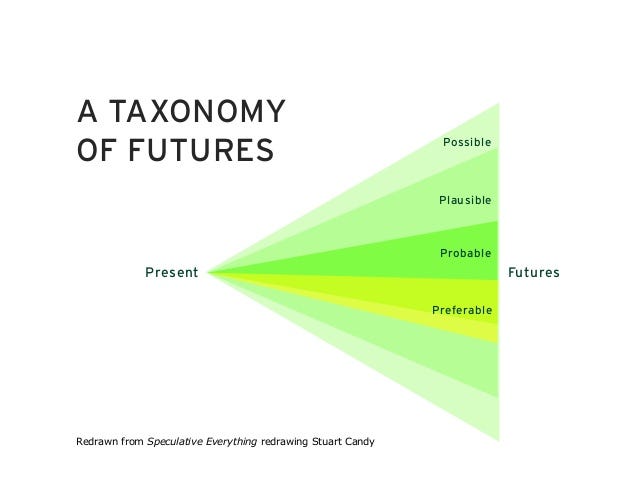
Midterm Concept Board (Speculative Futures taxonomy): This board draws from the optional reading, Speculative Everything (Dunne & Raby). It explores the concept of ‘Architecture in Crisis’ through a speculative design lens. This theoretical framework directly informed my technical approach. It dictated how I programmed Unreal Engine to accommodate the seamless switch. It also managed the physical collision of two overlapping timelines.
Call to Action & Feedback: I am refining the “weight” of the transition between State A and State B. I am also adjusting the timing of the transition. I would love to hear your thoughts on the Chrono-Architecture mechanic. Does the localized “Sphere Void” effectively communicate the feeling of stepping into the past? Or would a global, instant environmental shift feel more impactful?
 Course Blog
Leave a comment