Memory Gate,
An Exploration of Architectural Fragility
Sriya Thotakura
1. Concept & Outcome
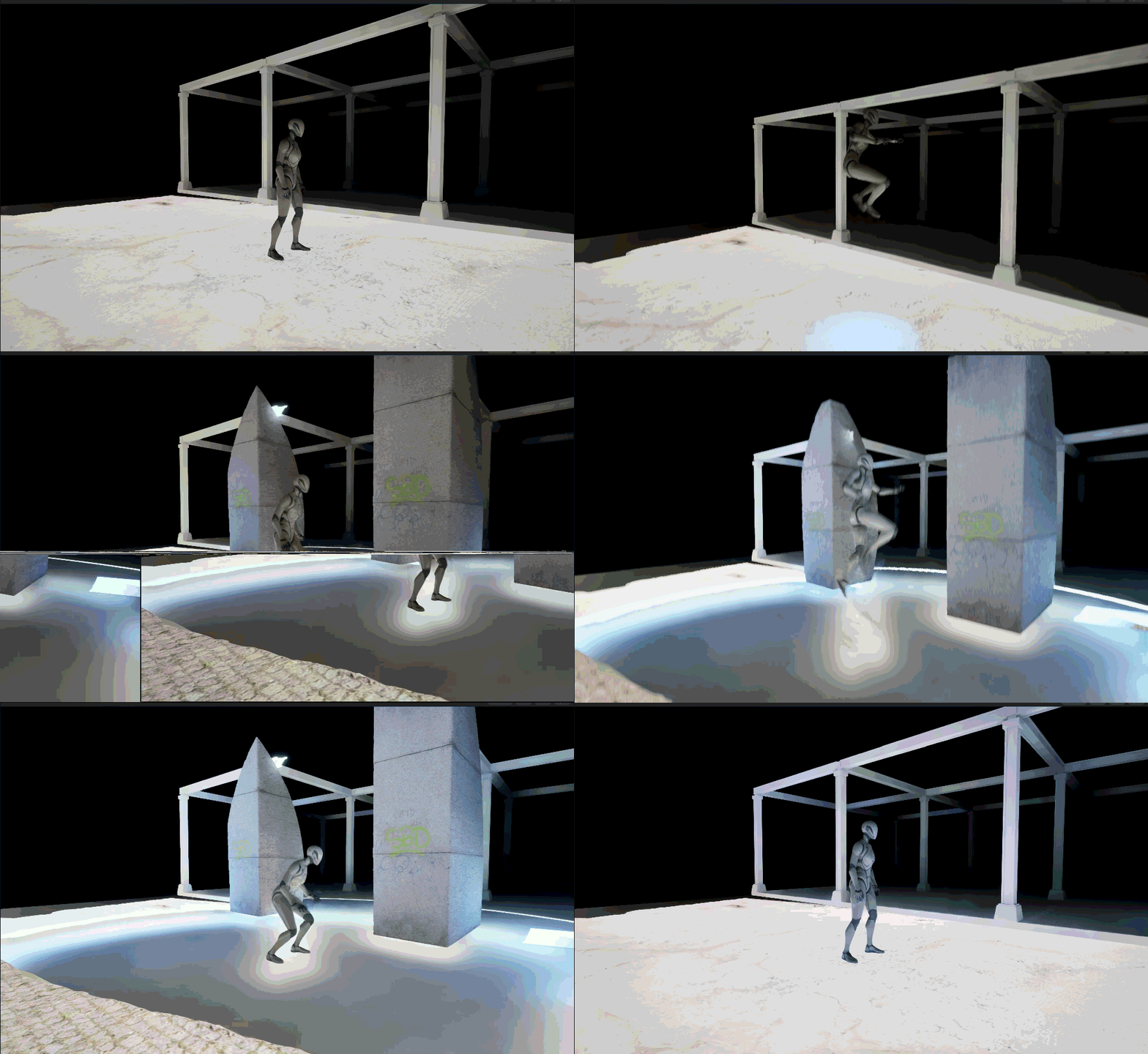
Memory Slice is an interactive exploration of climatic and structural fragility. It serves as a playable archive of past and present calamities. The core design draws inspiration from three sources. It is influenced by Lebbeus Woods’ architecture for seismic shifts. Rachel Sussman’s Sidewalk Kintsugi treats breakage as a highlighted event. Lastly, the 4D puzzle logic of the game Miegakure contributes to its design.
Outcome:
2. The Creative & Learning Process
My development pipeline was broken into four distinct phases. Throughout this process, I utilized AI (Gemini) as a technical co-architect to structure my Blueprint logic. I studied Miegakure gameplay breakdowns on YouTube. These studies helped me to translate theoretical 4D space into rigid Unreal Engine mechanics.
- Architectural Foundation: Sourcing and standardizing complex
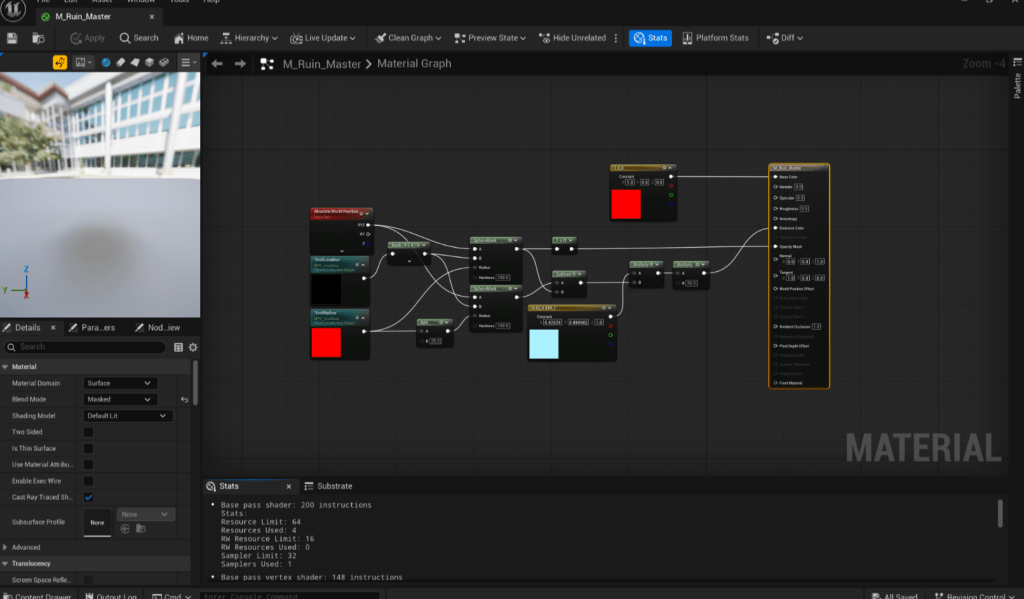
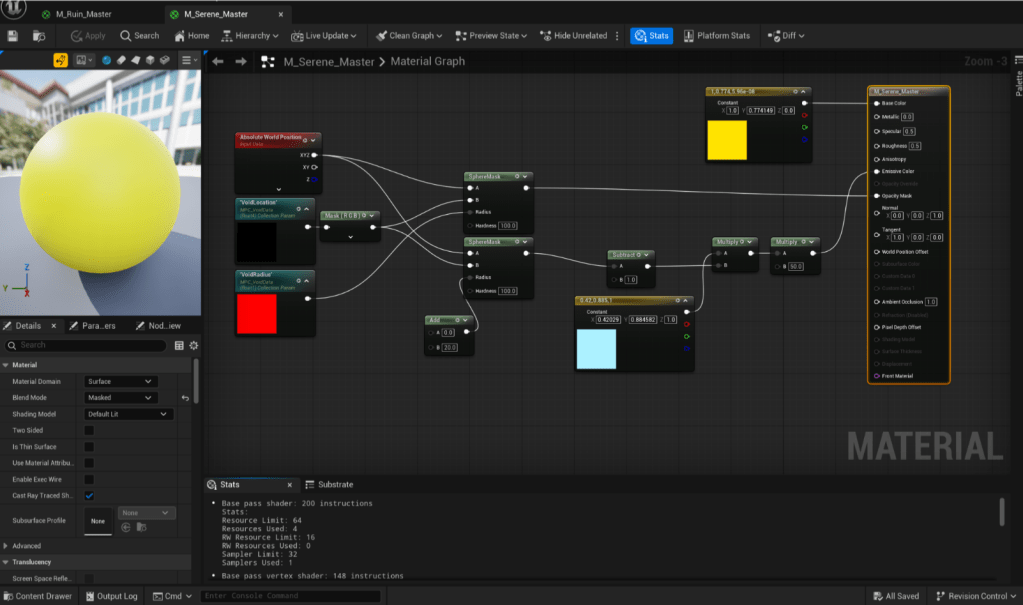
.glbgeometry to opaque materials to ensure accurate, consistent lighting. - 4D Transition Logic: Developing a Master Material system using
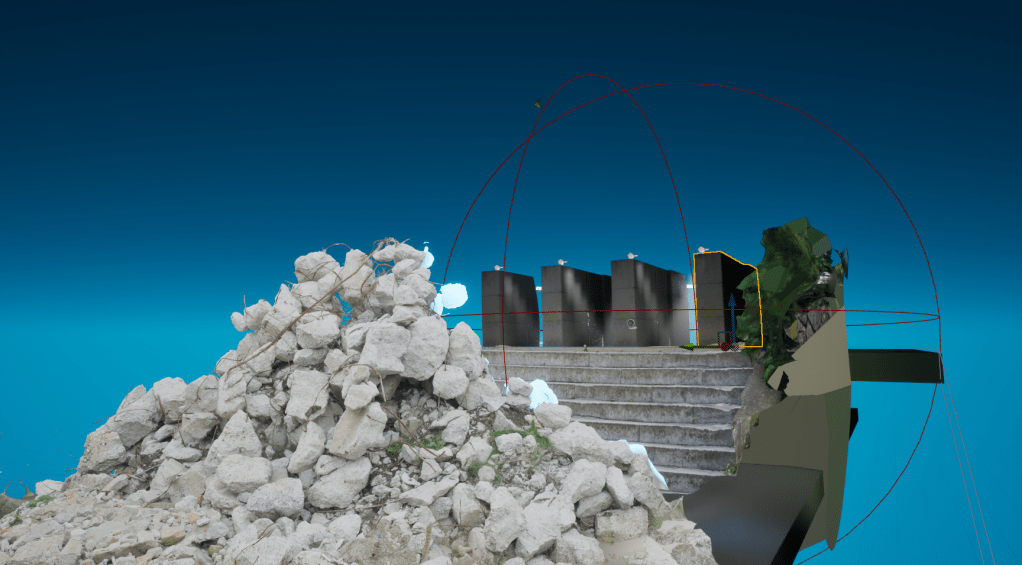
MatLayerBlend_Standardto non-destructively blend the Serene and Ruin states. - Environmental Storytelling: Constructing the “Underwater” abyss using heavy Volumetric Fog. Cyan god rays are also used. Additionally, procedural moss growth is driven by World Aligned Normals.
- Interaction Design: Coding Blueprint Timelines to map the Z/X keys to the synchronized reality shift.
3. Under the Hood: Blueprint Walkthrough
The game’s script is driven by a toggle-based reality shift, broken down into three main operational blocks:
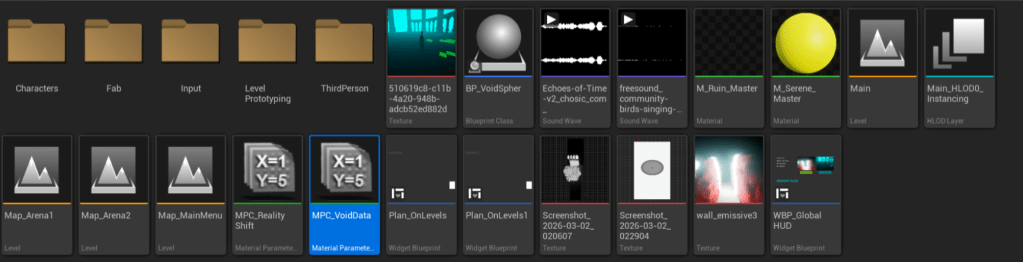
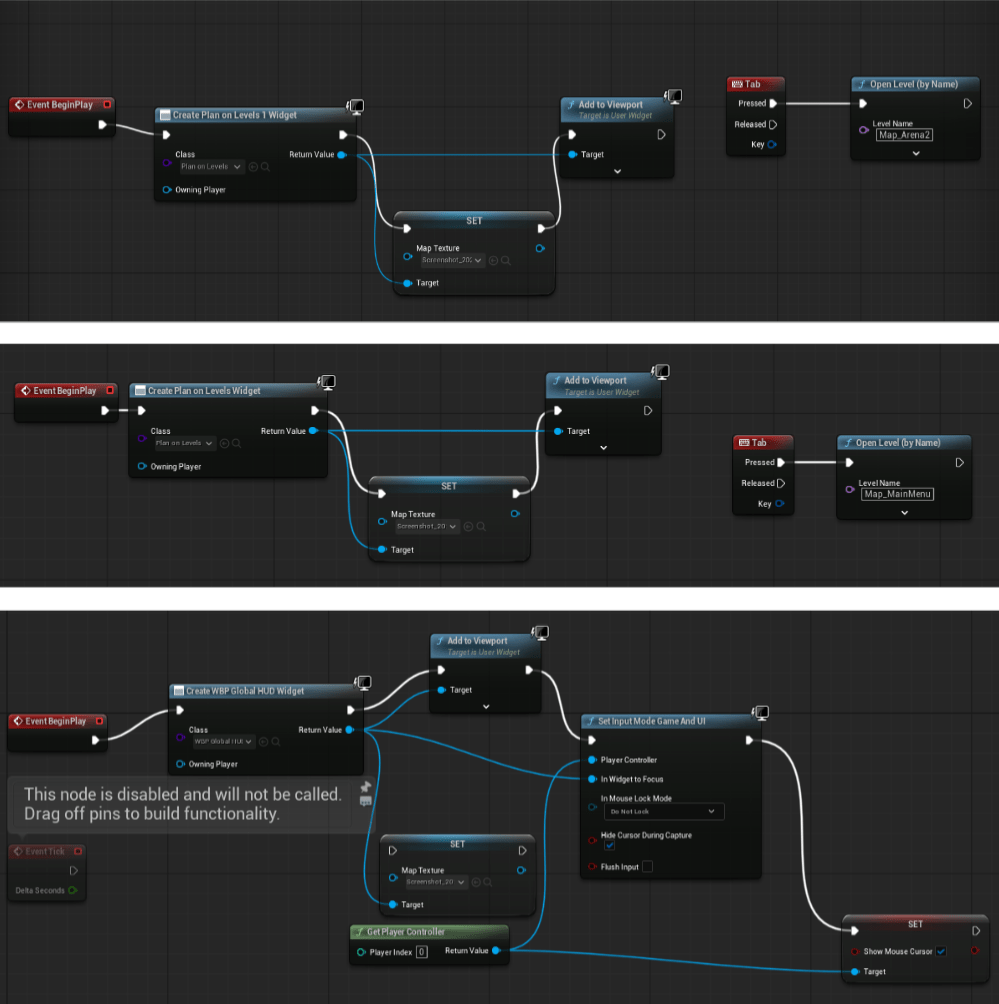
- The Input: The Z and X keys trigger the sequence.
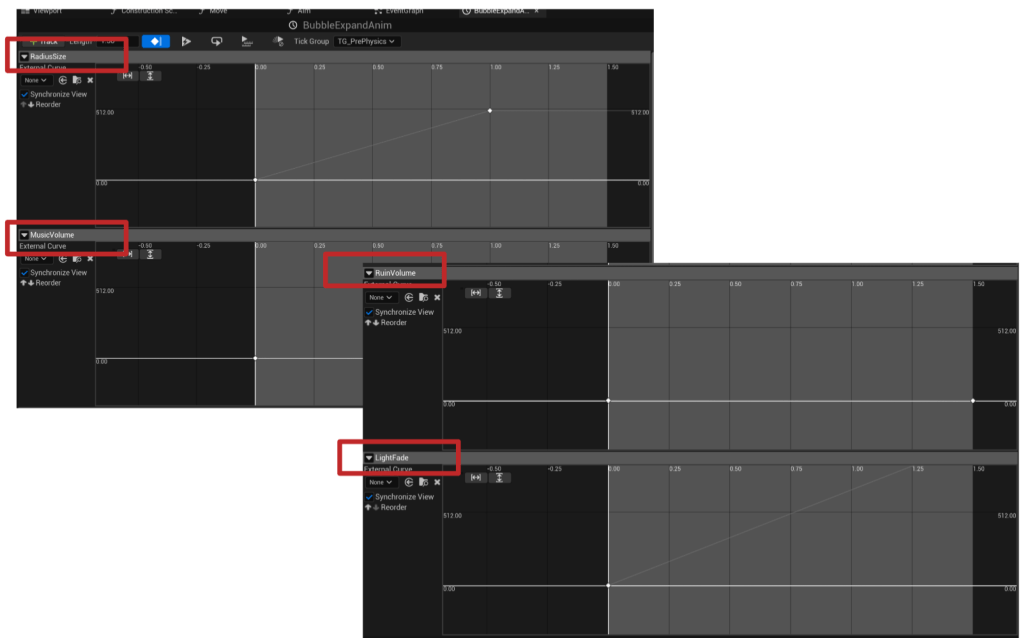
- The Timeline: A central logic node crossfades the audio. It dims the directional lighting. It also adjusts the volumetric fog density to sell the environmental shift.
- The Sphere Void: A localized vector calculation that overrides the global timeline. This enables the player to “zone out” of the fractured environment. It reveals the hidden timeline strictly within a specific radius.

4. Successes & Challenges
- Successes: The multi-sensory transitions were the highlight. Fusing the “Temporal Interaction” with the “Material Metamorphosis” created a deeply atmospheric experience. The procedural algae growth on top-facing normal added to the atmosphere without breaking immersion.

- Challenges: The biggest hurdle was balancing Material Complexity against Frame Rate. Importing raw
.glbfiles introduced severe Z-fighting and transparency glitches where structural elements flickered or vanished. Fixing this required a massive, manual overhaul of the Master Materials to enforce strict opaque rendering.
5. Next Steps
Given more time and resources, my next steps for Memory Slice would be:
- Adaptive Audio: Implementing a soundtrack that reacts granularly to the player’s XYZ position in the world.
- UI and interface: Refine and make interactive Dashboards (including live navigation board and controls).
- TouchDesigner Integration: Utilizing the Unreal Engine plugin for advanced, real-time narrative visuals.
- Performance: Deep-dive technical refinement and draw-call optimization across the entire level and design worlds based on existing monuments and narrative.
 Course Blog
Leave a comment